
The “Restore Local Partnership and Learning Event: Catalyzing Restoration Together” held from December 4–5, 2025, at Classic Resort Lodge in Musanze served as a platform to reflect on and showcase the tangible impacts of the restoration efforts in Rwanda. The event brought together restoration Champions implementing projects under the TerraFund AFR100 Cohorts 1 and 2, with the aim of strengthening collaboration, consolidating learning, and highlighting results achieved through peer-to-peer engagement.
Following the orientation laid by the Restore Local Peer-to-Peer Learning workshop, participating Champions demonstrated how shared learning would be translated into concrete actions to improve implementation quality, accountability, and results. Subsequently, Rwanda Climate Change and Development Network (RCCDN) actively applied the knowledge gained and networking achieved to enable an improvement as elaborated below:
1. Strengthened data collection and polygon mapping capacity:
After the peer-to-peer learning arrangements, RCCDN made arrangement and engaged two champions with intentions of learning together restoration techniques.
In the same line, Gilbert Niwenshuti (RCCDN), Project Agronomist, strengthened his technical capacity in data collection and polygon mapping through direct consultation with Claver Kanyangira from Rural Development Initiatives. This peer exchange focused on improving practical skills and refining approaches to field-based data collection.
In the same context, Aline Muhogerwa (RCCDN), project M&E Officer, enhanced her polygon mapping and field data collection skills through two days of focused sessions with Jean D’Amour Maniriho from Organization for Support to the Environmental Protection and Climate Change Adaptation (OSEPCCA), which provided practical guidance and advanced her technical insights.
She applied these newly acquired techniques in RCCDN’s restoration project sites, resulting in more efficient field operations and higher-quality data. This strengthened capacity ensured that restoration data met technical requirements, supporting evidence-based planning, monitoring, and decision-making.
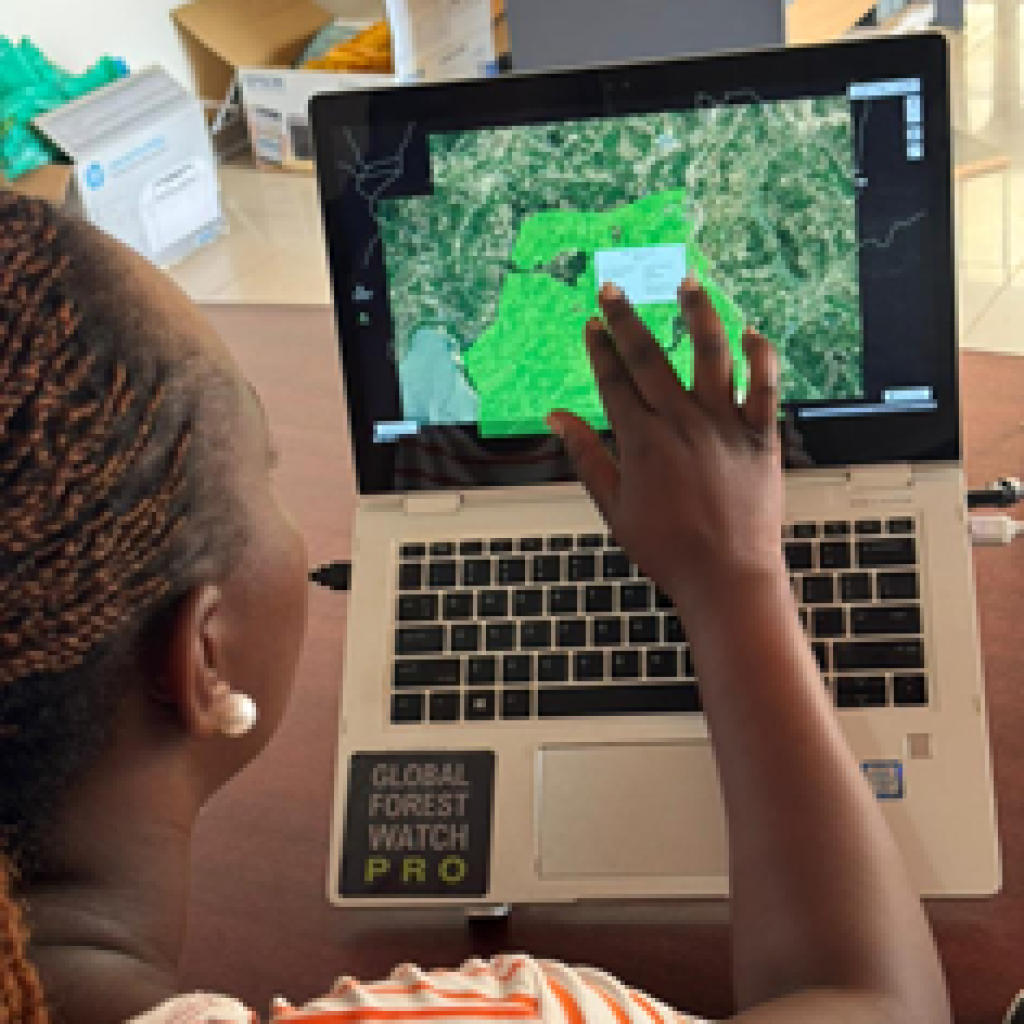
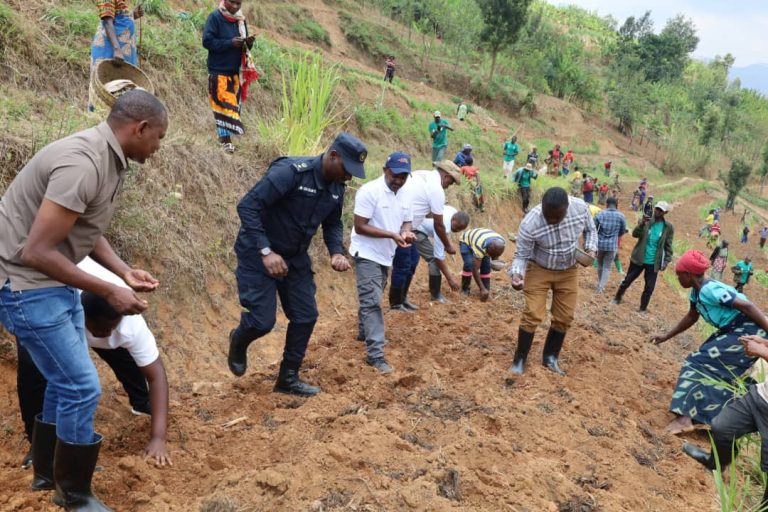
The upgraded skills were subsequently applied in RCCDN’s restoration project areas in Mubuga Sector, Karongi District, resulting in more accurate delineation of planted restoration sites. As a result, the precision and reliability of spatial data were significantly improved, supporting more effective restoration planning, monitoring, and reporting.
2. Expanded acquired capacity through local youth skills transfer:
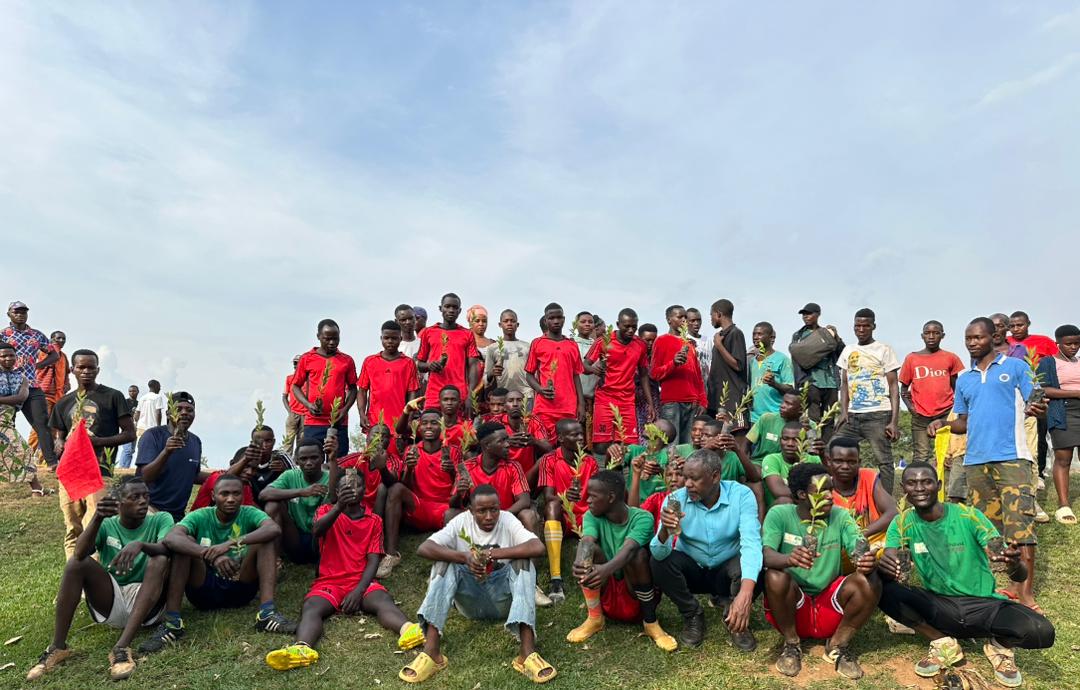
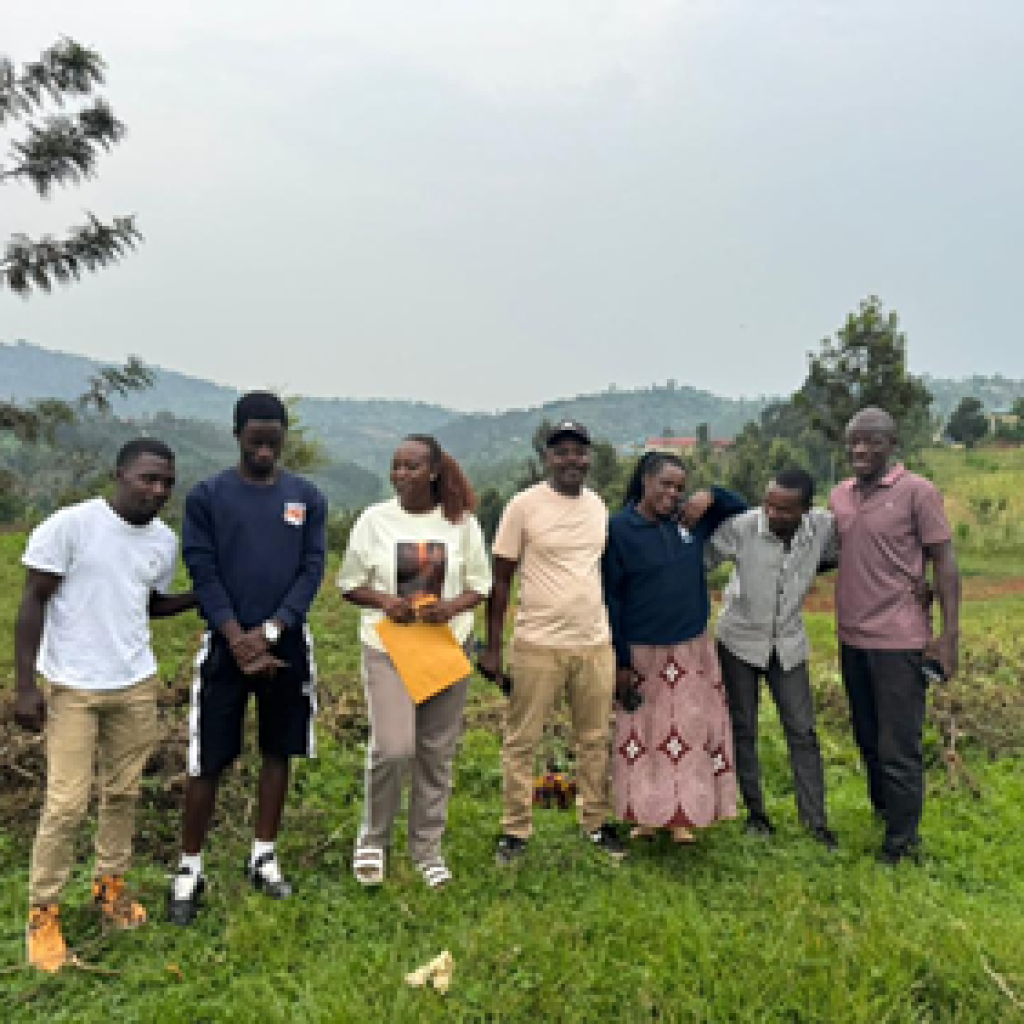
After consolidating internal skills through peer to peer learning sessions, RCCDN field officers extended knowledge to the community by training 5 local youth (1 female and 4 men) in polygon mapping and data collection techniques.
Together with trained field staff, this formed a seven-member field team capable of conducting accurate and timely data collection across RCCDN 3 restoration project sites of Ryaruhanga, Nyagatovu and Murangara in Mubuga Sector, Karongi District. This approach improved operational efficiency while empowering local youth with marketable technical skills, restoration technics and employment opportunities, reinforcing inclusive restoration practices.
3. From learning to action: Achieved data collection and entry
In line with the peer-to-peer learning requirements of the “Restore Local Partnership and Learning Event: Catalyzing Restoration Together” (December 4–5, 2025), RCCDN developed an action plan during the workshop and implemented it thereafter, including:
- Training field staff on polygon mapping;
- Systematically mapping planted restoration areas;
- Consulting the TerraFund technical team;
- Finalizing and submitting restoration polygons and related data.
4. Over all outcomes
As a result of the peer-to-peer learning process, RCCDN significantly strengthened its institutional capacity for restoration data collection, polygon mapping, and evidence-based reporting. Improved technical competencies among project staff enhanced the accuracy, consistency, and reliability of spatial data, enabling more effective restoration planning, monitoring, and decision-making across project sites. This capacity was further amplified through targeted skills transfer to local youth, strengthening field operations while promoting inclusive participation and practical employment opportunities.
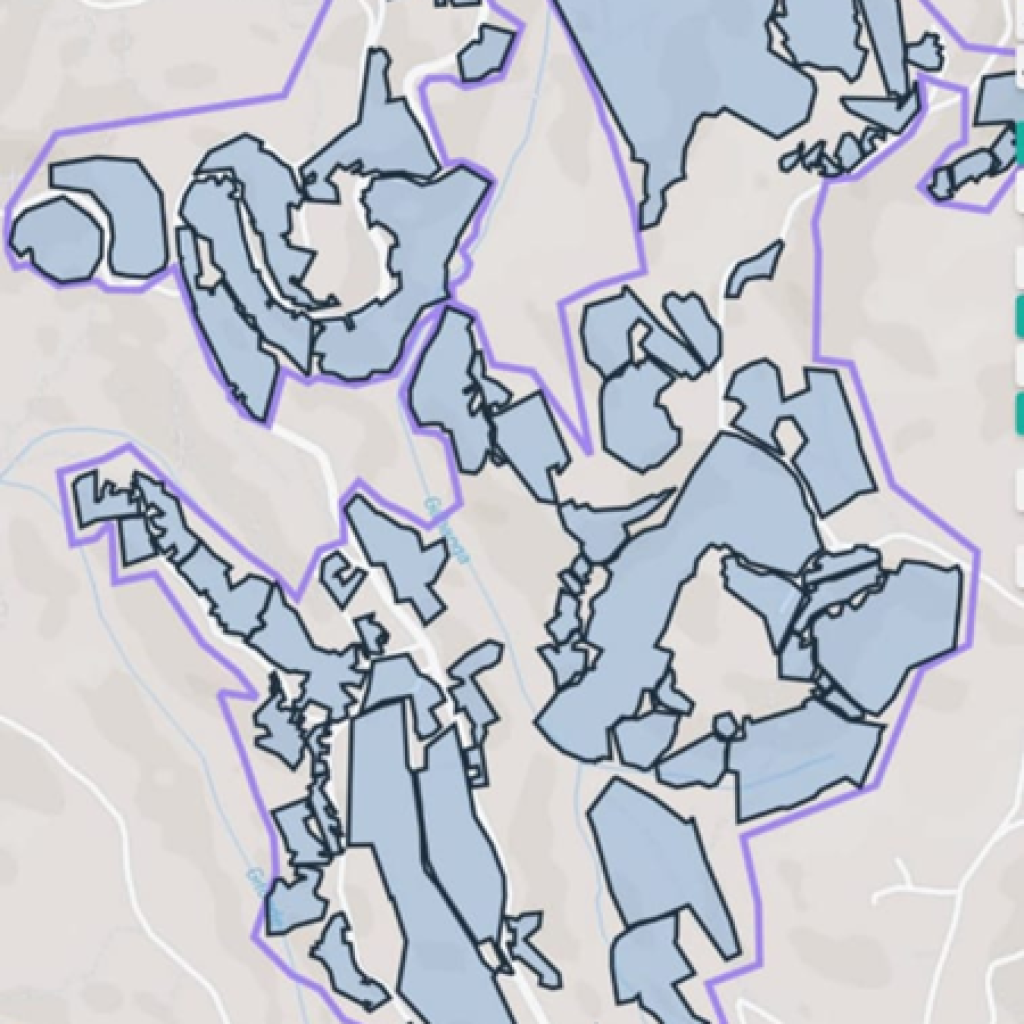
Building on these competencies, RCCDN has confidently verified 862.7 hectares of planted restoration area out of the 1,013 hectares under contract, with approximately 150.3 hectares remaining to be planted and mapped. All submitted restoration polygons and associated datasets have been approved in the TerraMatch system, confirming compliance with TerraFund’s technical reporting standards and timelines. These results demonstrate that peer-to-peer learning was effectively translated into verified, high-quality restoration outputs directly applied to field implementation, data collection, and reporting.
The training of 5 local youth, drawn from a cohort of 50 RCCDN barefoot scientists, complements prior two years of hands-on training in nursery establishment and management, site preparation, tree planting, and maintenance. The current training in polygon mapping and restoration data collection completes a holistic, end-to-end restoration skills package that supports self-employment and avails skilled expertise to local restoration champions, while strengthening the local pool of restoration capacity and fostering youth leadership as ambassadors of locally led restoration efforts.
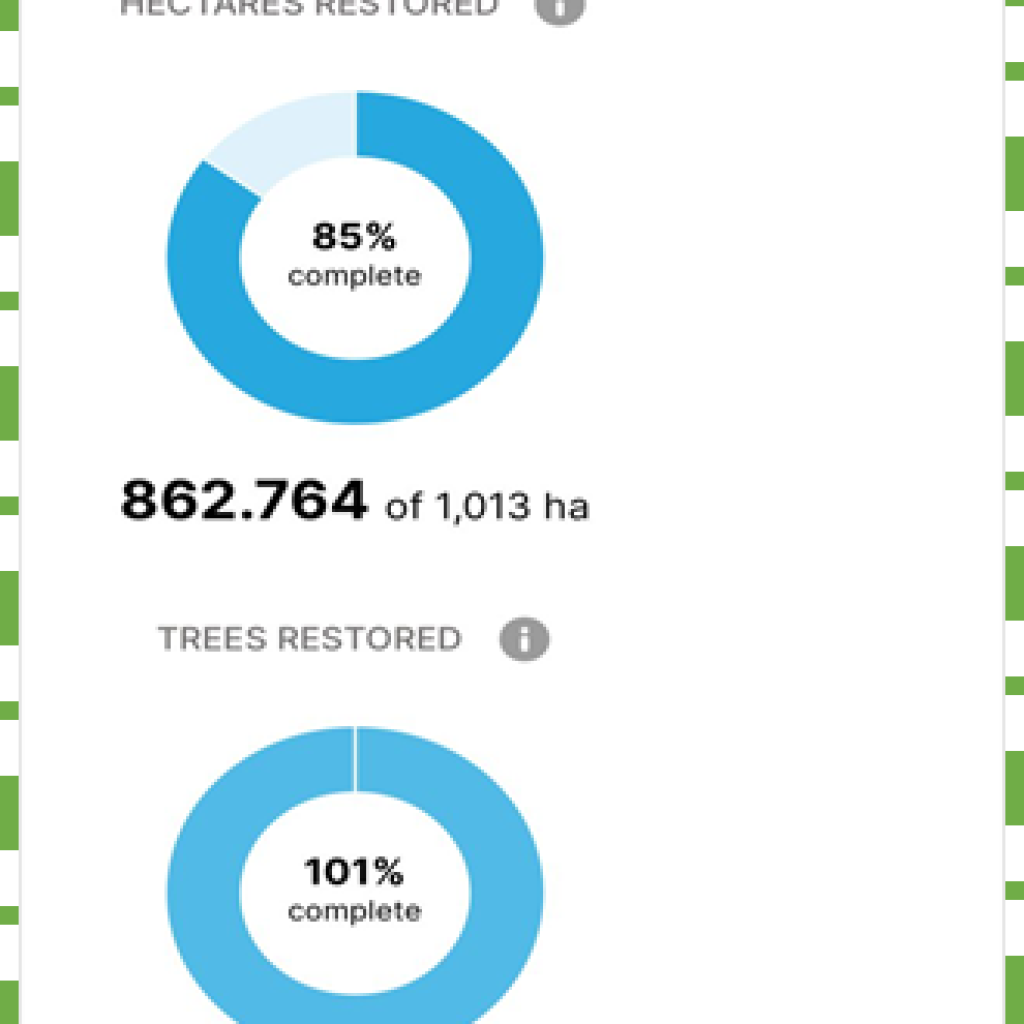
At the time of writing, restoration reporting remains ongoing, and while further refinement and verification may be required as field activities progress, RCCDN now, has the technical capacity to ensure quality assurance and achieve full polygon coverage for the contracted 1,013 hectares by December 2026.
5. Looking ahead:
The experiences shared during the Restore Local Partnership and learning event confirmed that peer-to-peer learning and collaboration are powerful drivers of effective restoration. For RCCDN, the process delivered:
- Enhanced technical expertise
- Improved data quality and polygons mapping efficiency
- Strengthened youth and local capacity
- Set a stronger foundation for inter-organizational partnerships and staff networking
RCCDN recognizes and appreciates the well-designed peer-to-peer learning approach, acknowledges its tangible impacts, and strongly recommends its continued adoption. By learning together and acting collectively, restoration champions are better positioned to meet their targets and contribute meaningfully to Rwanda’s landscape restoration goals under AFR100. The event reaffirmed that learning together leads to growing together turning shared knowledge into verified restoration results.
Written and Prepared By Charles Rutagyengwa
Edited and Published by Jeannette Kawera