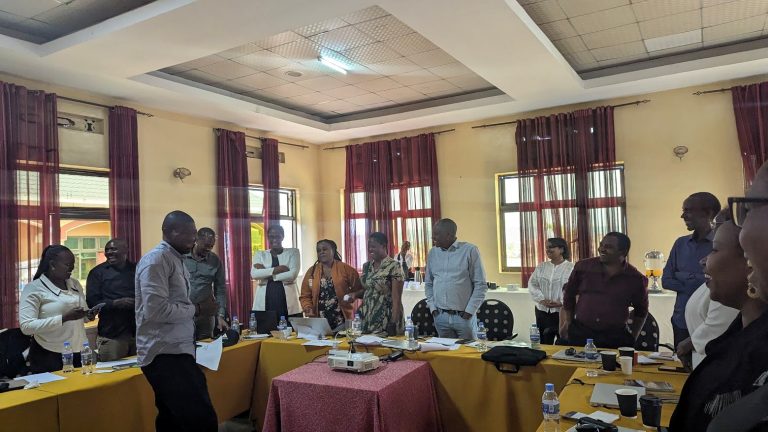

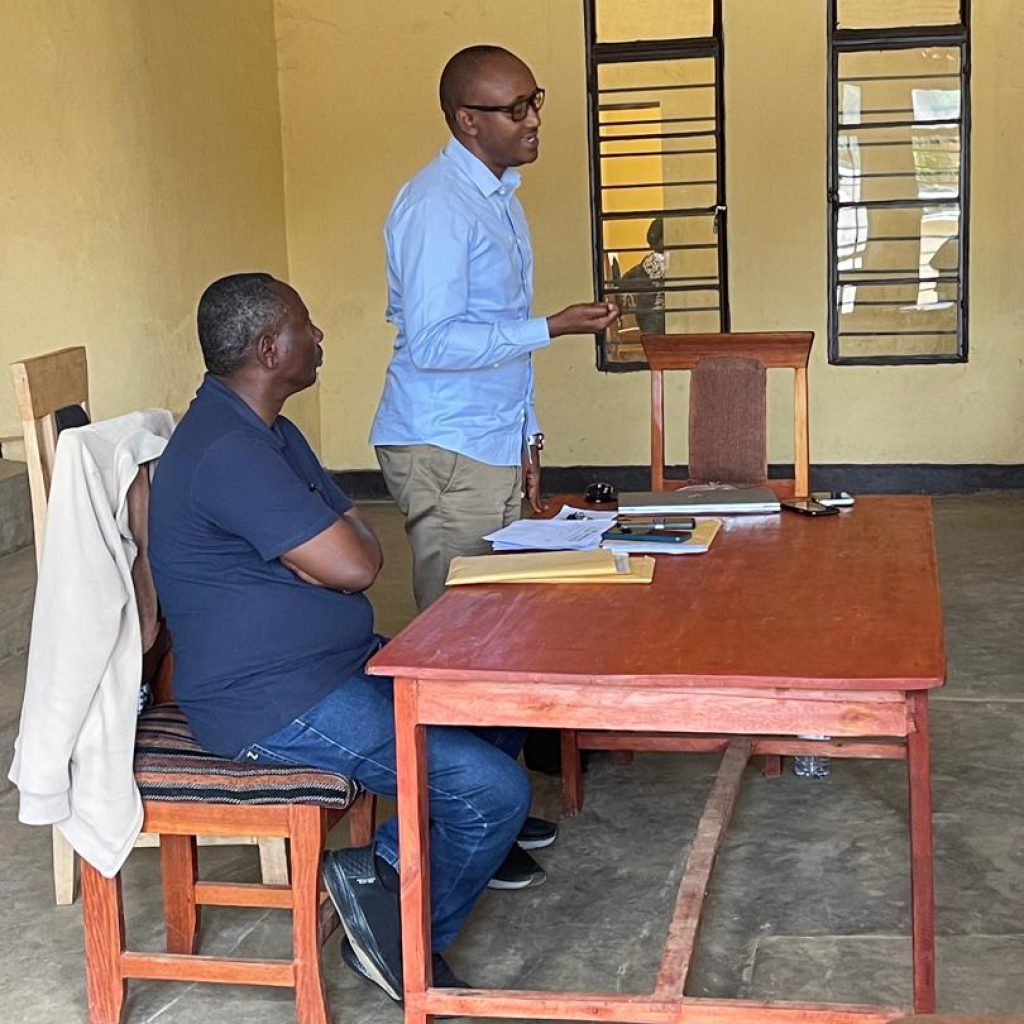
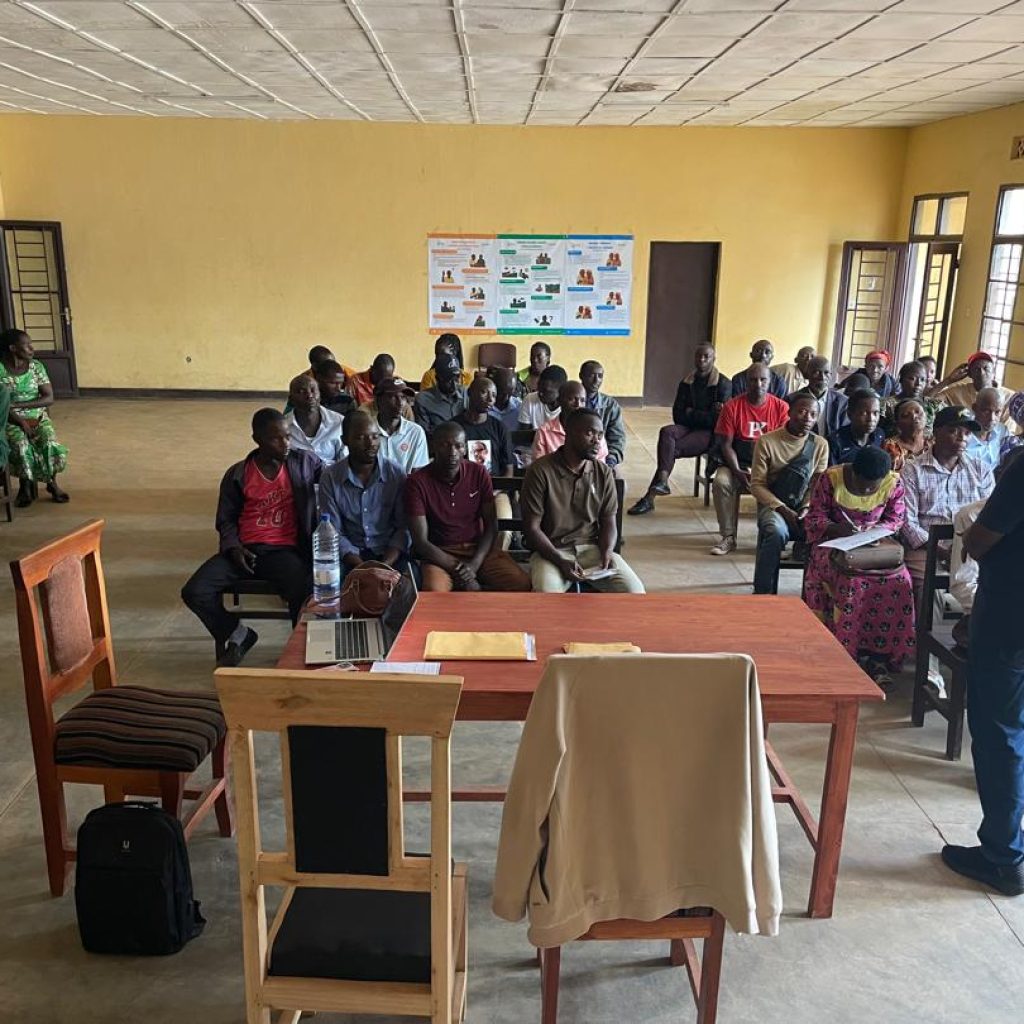
On April 22, 2026, the Rwanda Climate Change and Development Network (RCCDN) introduced an adjustment in approach to strengthen the community-led tree maintenance approach in Mubuga Sector under the TerraFund AFR100-funded project, “Restore Degraded Landscapes of Karongi District in Western Province.”
The adjustment shifted the responsibility for routine tree maintenance and follow-up from the barefoot scientists, supported by RCCDN Field Officers, who had been carrying out the work for the past 16 months, to local leadership structures composed of leaders from 12 villages and 96 Isibo (sub-village) leaders. The initiative was guided by the RCCDN Coordinator together with the Sector Executive Secretary to reinforce local ownership, accountability, and sustainability of agroforestry restoration activities across the project sites
Strengthening Restoration Through Local Leadership
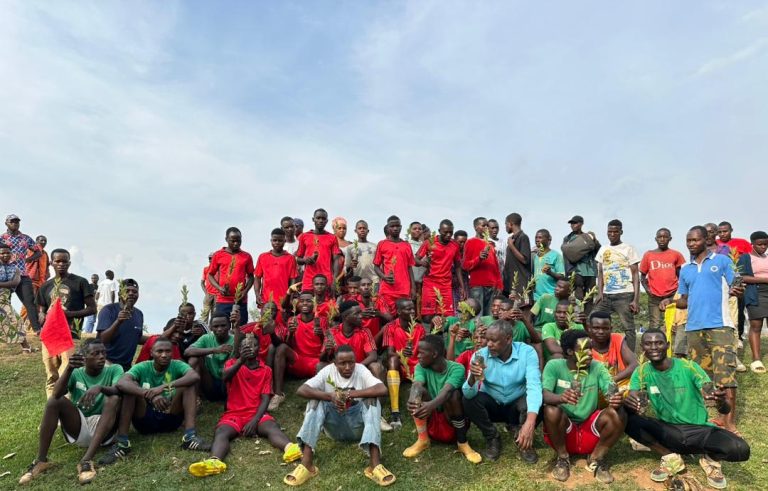
The project has restored 12 villages through agroforestry systems, planting 405,500 trees across 863 hectares and contributing to improved soil health, climate resilience, and household livelihoods. However, ensuring the long-term survival of planted trees remains essential to sustaining these gains.
To address this challenge, RCCDN is leveraging Rwanda’s local governance structures by engaging village and Isibo leaders (Abayobozi b’Imidugudu n’Isibo) in tree monitoring and community accountability. Working closely with households, local leaders promote proper tree maintenance and continuous follow-up. Building on this approach, RCCDN developed the Joint Tree Maintenance (JTM) Model to strengthen coordinated community participation and improve long-term tree survival.
The RCCDN Joint Tree Maintenance (JTM) Model
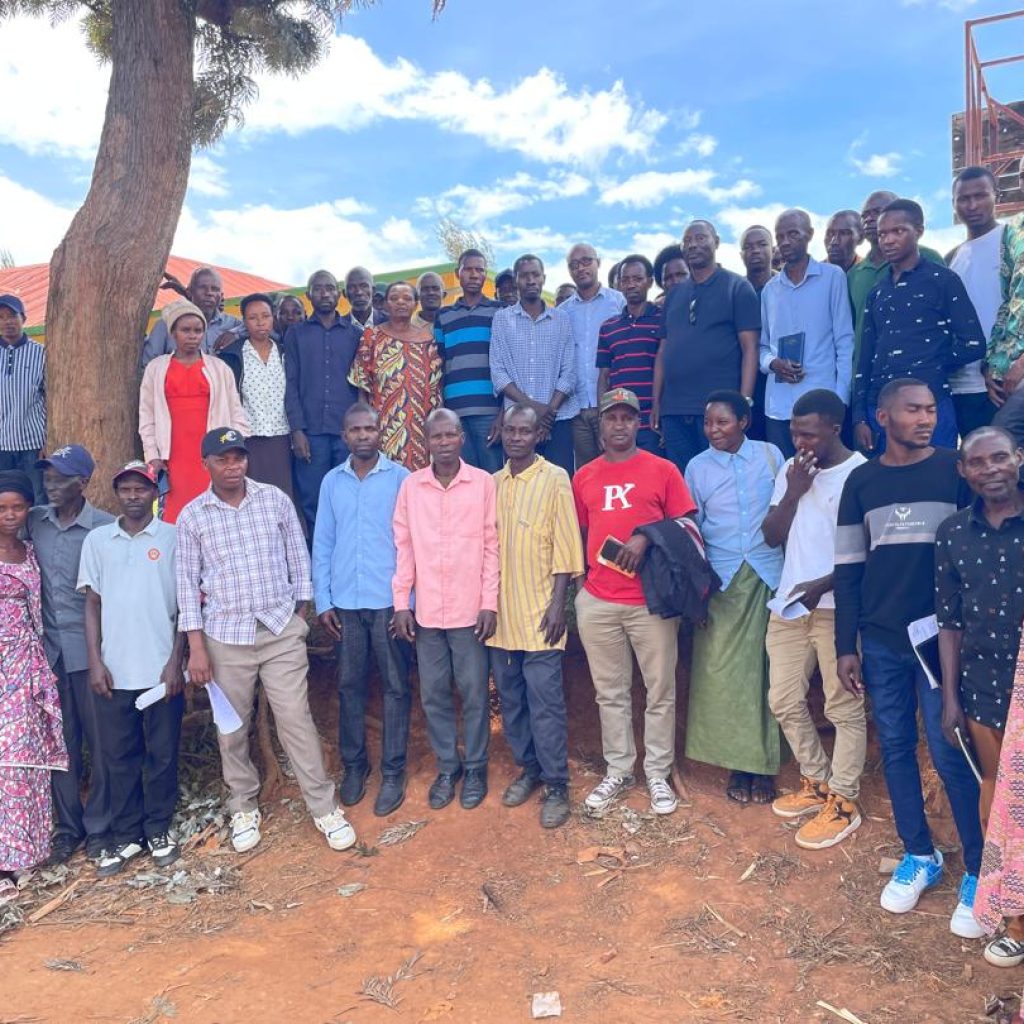
Building on this approach, the Rwanda Climate Change and Development Network (RCCDN) developed the Joint Tree Maintenance (JTM) Model, tailored to the local context in Mubuga Sector, to strengthen long-term tree care and survival through coordinated community participation. The model promotes collaboration between village leaders, Isibo leaders, and households by creating a shared understanding of tree maintenance practices, including watering, pruning, protection, and monitoring, through awareness and sensitization activities led by RCCDN.
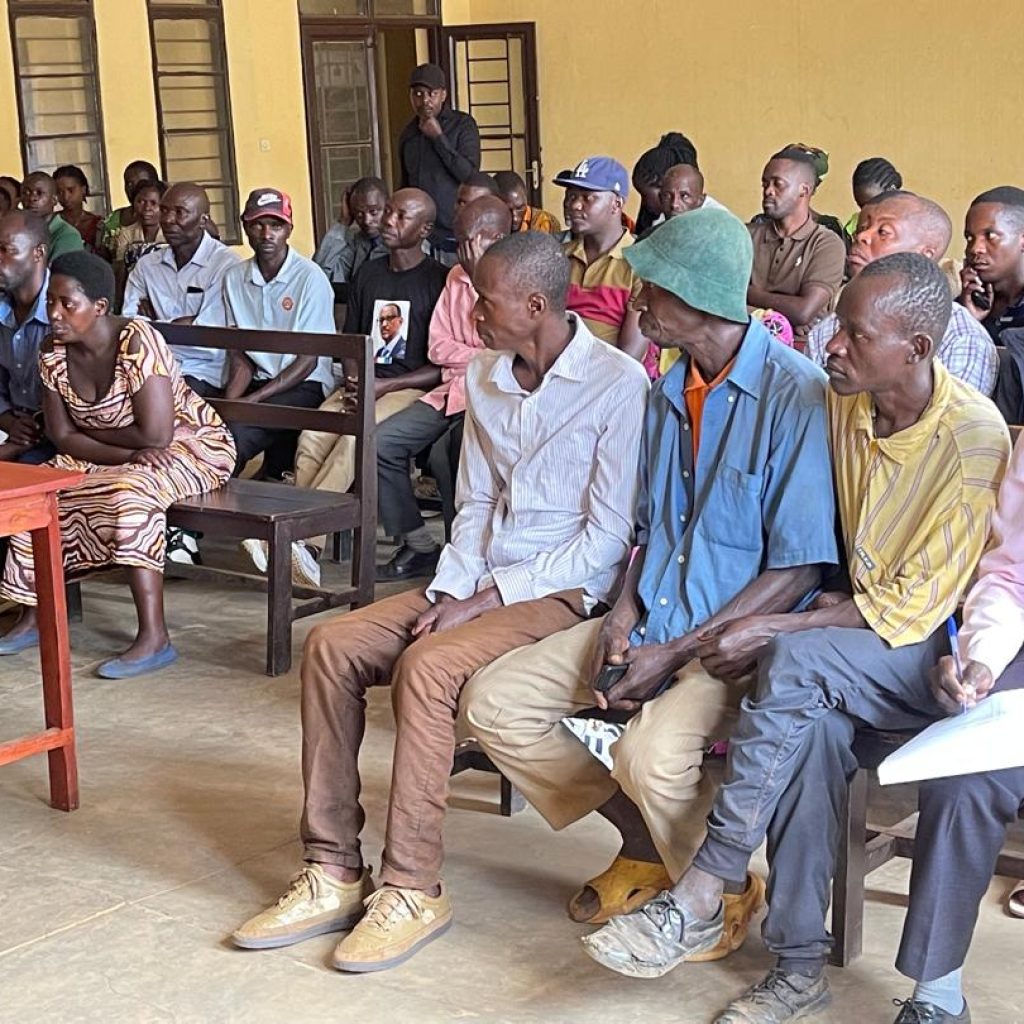
The model emphasizes clear roles and responsibilities from village to household level to strengthen accountability and coordination in tree maintenance. Households serve as the primary custodians of trees planted on their land, with support and supervision from village and Isibo leaders to promote ownership and improve tree survival.
RCCDN supports implementation through training, technical guidance, logistics, regular follow-up, and bi-annual joint review exercises involving local leaders and communities. These activities help monitor tree survival, address challenges, promote shared learning, and improve restoration outcomes through a continuous and coordinated community-driven approach.
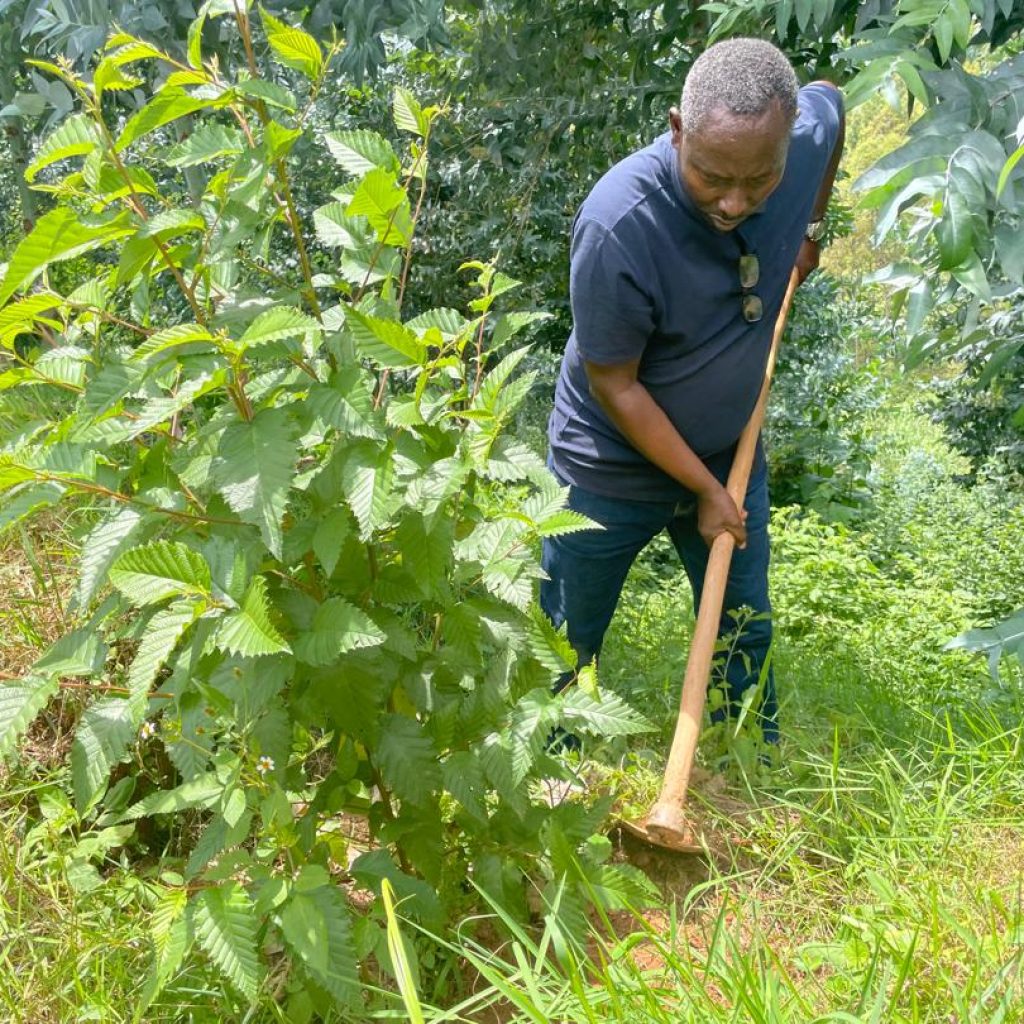
RCCDN JTM Model Cycle
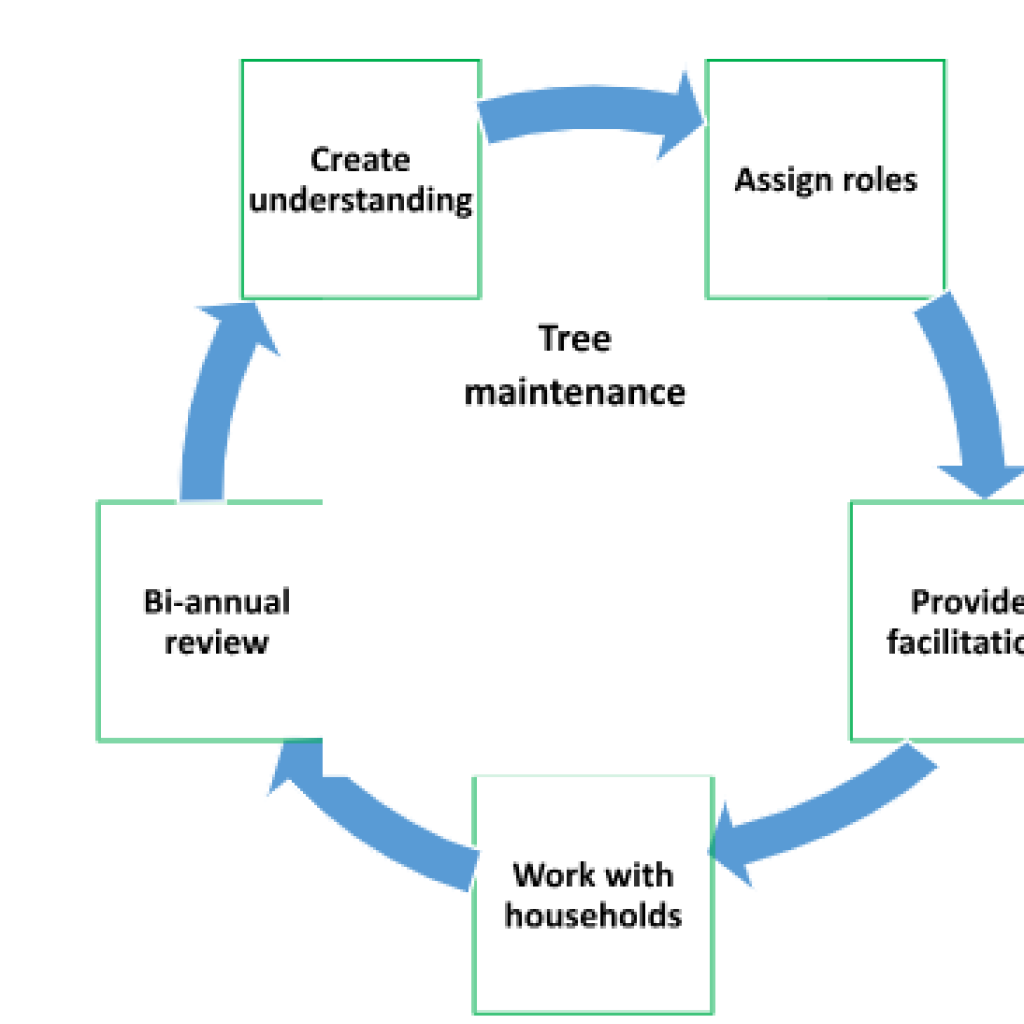
Through this model, RCCDN is shifting from tree planting campaigns to long-term landscape stewardship by integrating restoration responsibilities into existing community leadership structures. Village leaders work through Isibo leaders to ensure that each household takes responsibility for trees planted on their land, strengthening accountability, monitoring, and continuous follow-up within the community.
During the meeting, Faustin Vuningoma emphasized that tree planting is only the beginning and that the success of restoration depends on how well communities care for the trees. He noted that working through village and Isibo leaders helps ensure that every planted tree has both an owner and a future, reflecting RCCDN’s commitment to sustainable environmental and socio-economic benefits.
Community-Led Restoration for Scale and Sustainability
Managing restoration across 863 hectares with 405,500 trees requires a decentralized and community-driven approach that goes beyond the capacity of a single Field Officer. The wide geographic coverage and need for continuous follow-up make local participation essential for effective tree maintenance and survival.
To strengthen long-term sustainability, RCCDN is building the capacity of village and Isibo leaders to serve as community-based restoration stewards. Over the four-year implementation period, leaders from 12 villages and 96 Isibo groups will gain practical skills in tree monitoring, maintenance, and community mobilization, helping embed restoration knowledge within local communities.
The approach also promotes environmental awareness and behavioral change at household level, as knowledge and responsibility are shared through existing community leadership structures. By combining local ownership with continuous capacity building, the model provides a scalable and cost-effective pathway for sustaining restoration outcomes and supporting Rwanda’s broader climate resilience goals.
RCCDN support to facilitate local leaders in tree maintenance
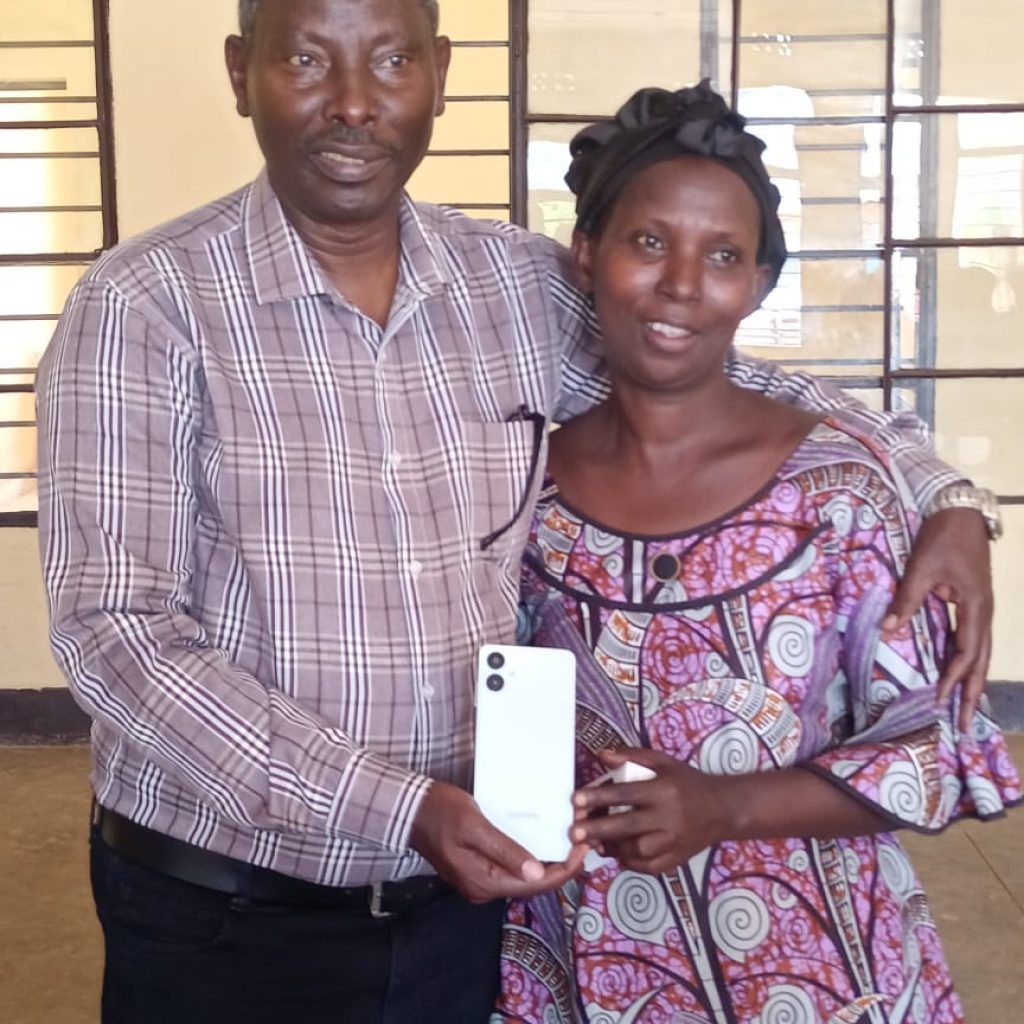
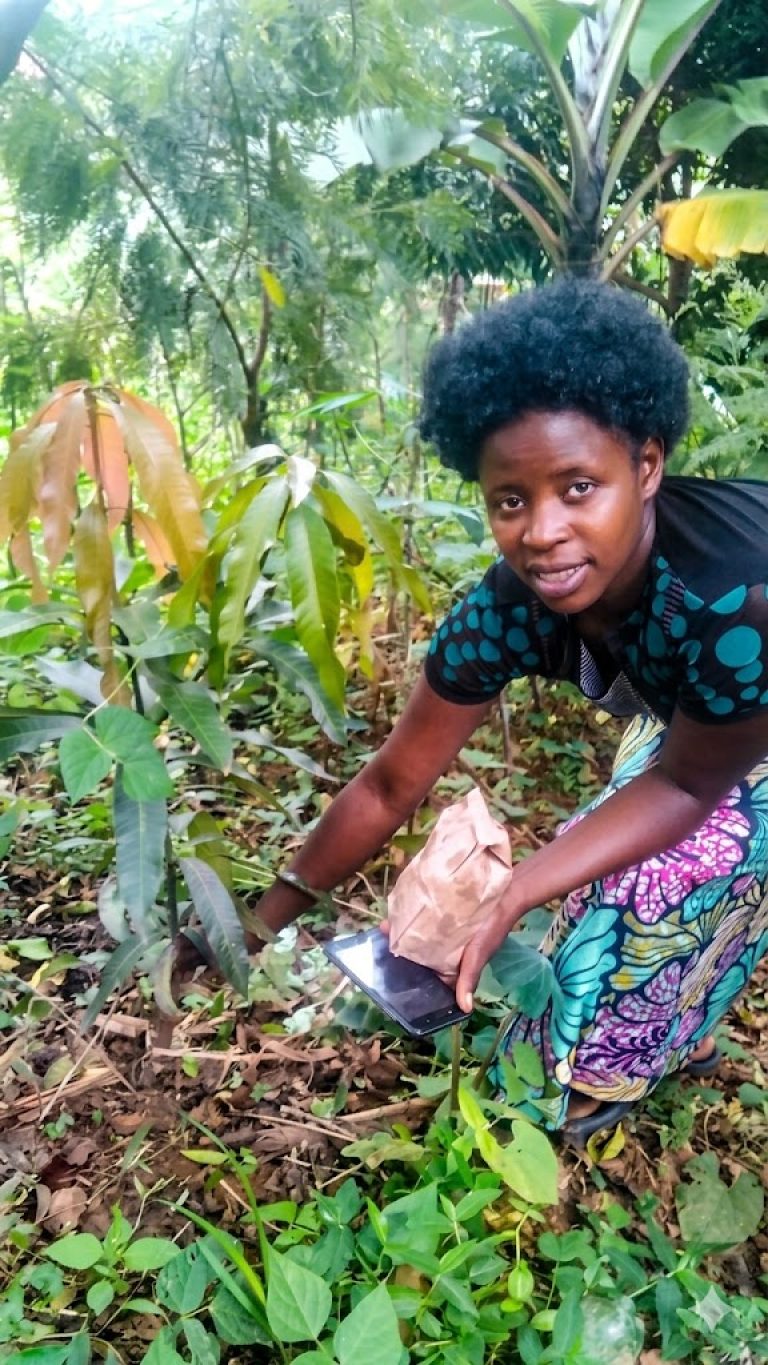
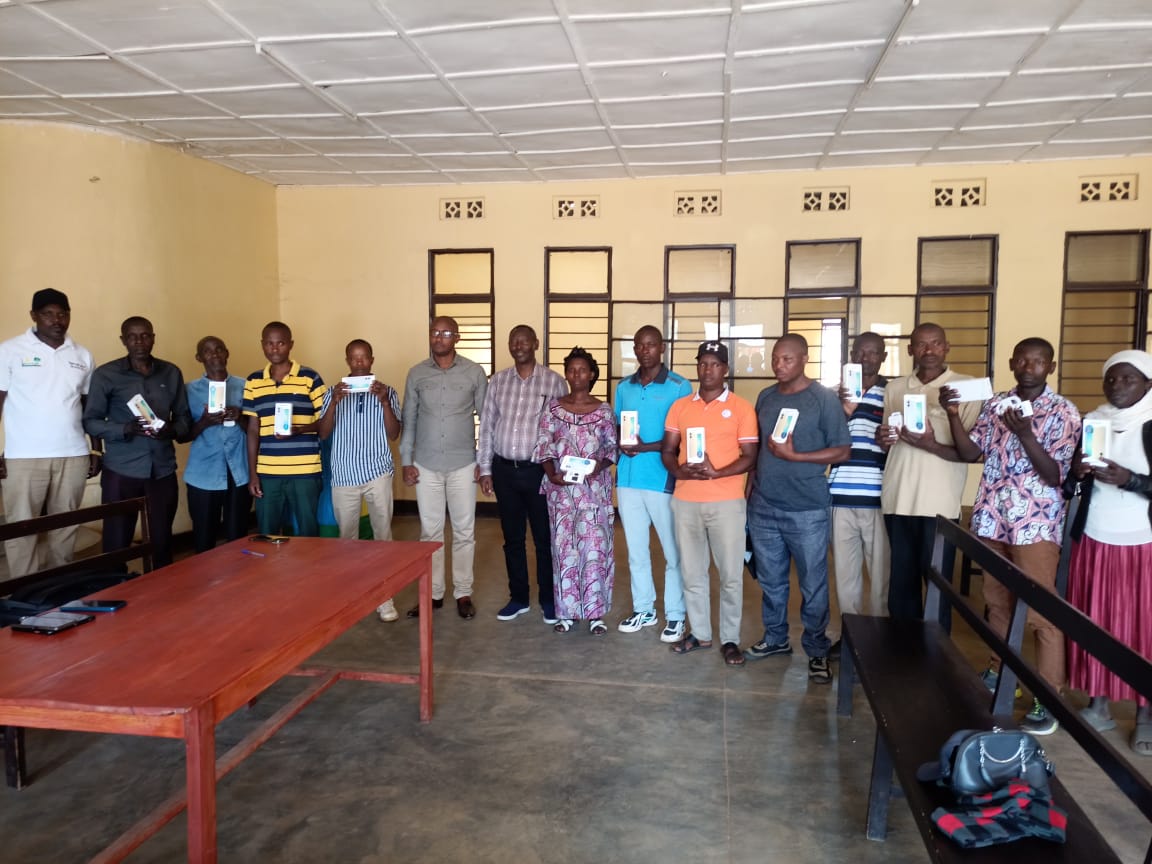
RCCDN honored its commitment to support local leaders in tree maintenance by providing logistics support to 96 Isibo leaders. Today, 19 May 2026, RCCDN Coordinator also distributed Samsung smartphones to 12 village leaders to strengthen tree monitoring and reporting activities.
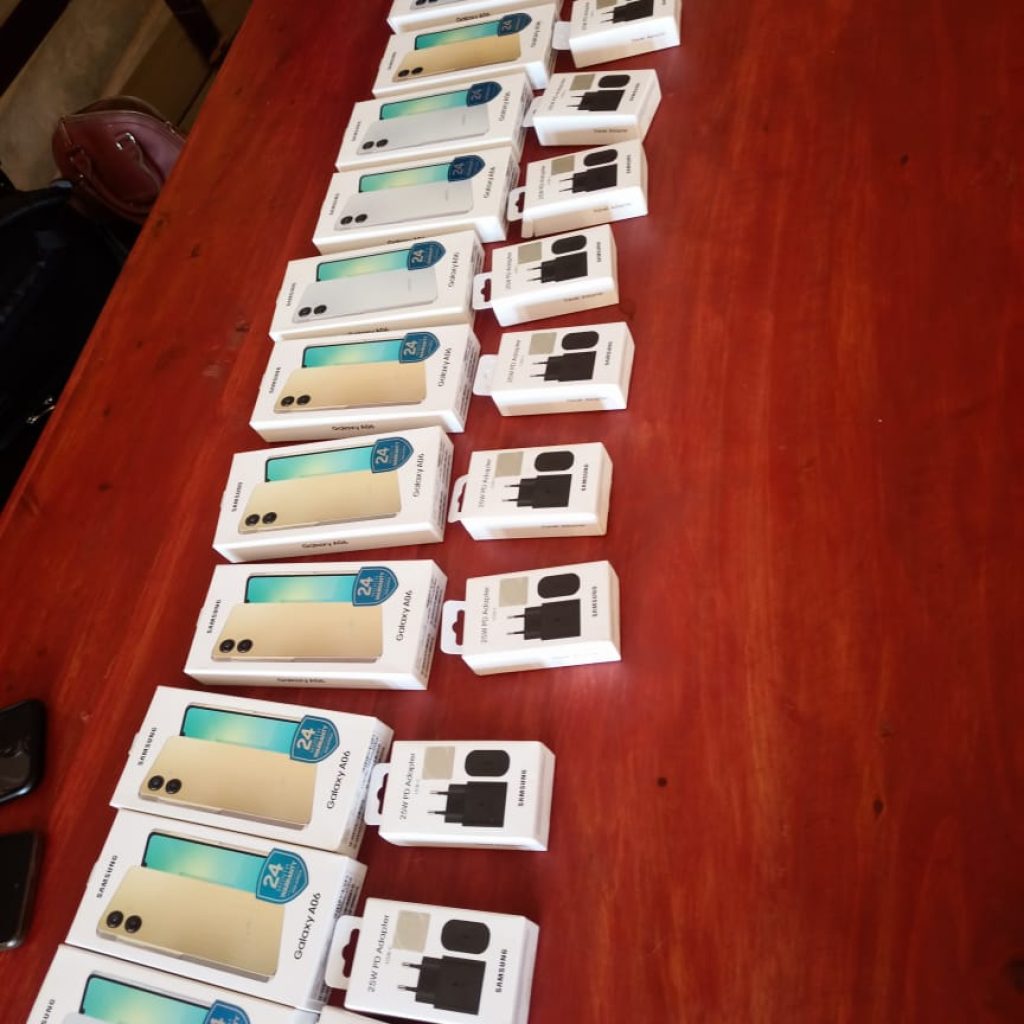
The smartphones will enable village leaders to capture and share real-time information, including photos, during tree maintenance and monitoring activities. This is expected to improve coordination, accountability, and follow-up across restoration sites.
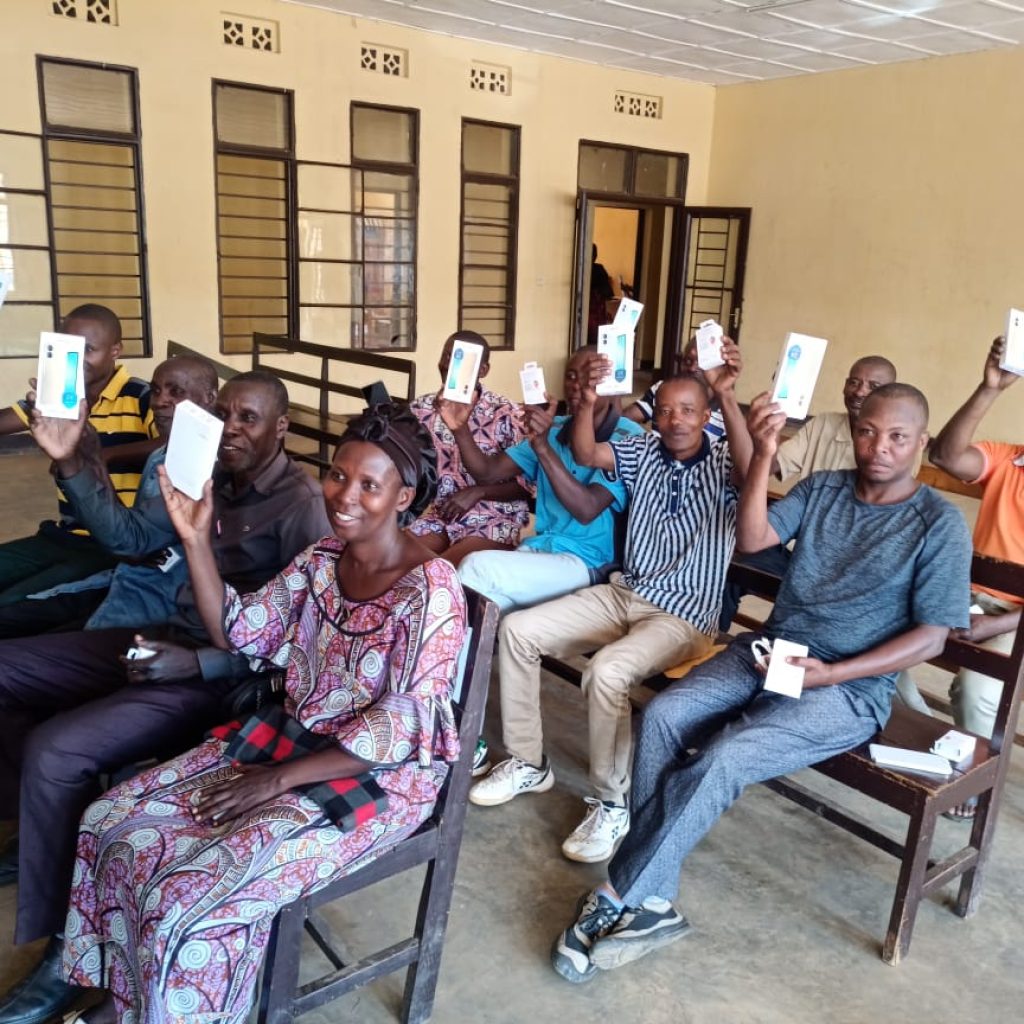
Beyond supporting effective tree maintenance, the distribution of smartphones also contributes to the Government of Rwanda’s digital transformation agenda and targets aimed at increasing smartphone access and use at the community level.
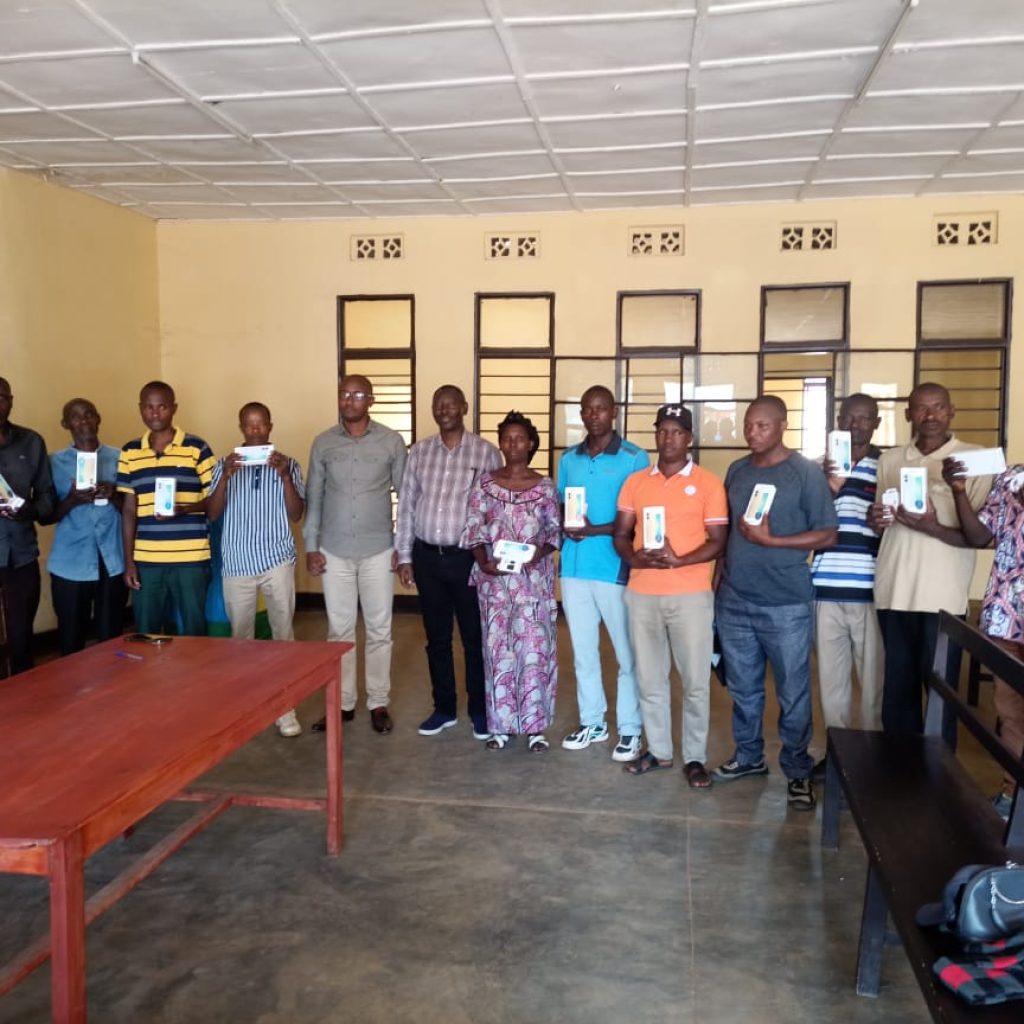
In the presence of the Executive Secretary of Mubuga Sector, the village leaders committed to working closely with RCCDN over the next four years to ensure the healthy growth and survival of the planted trees. The Executive Secretary encouraged the local leaders to make proper and responsible use of the smartphones to support effective tree monitoring and reporting activities, while also benefiting their families and farming activities.
Written and Prepared By Charles Rutagyengwa
Edited and Published by Jeannette Kawera